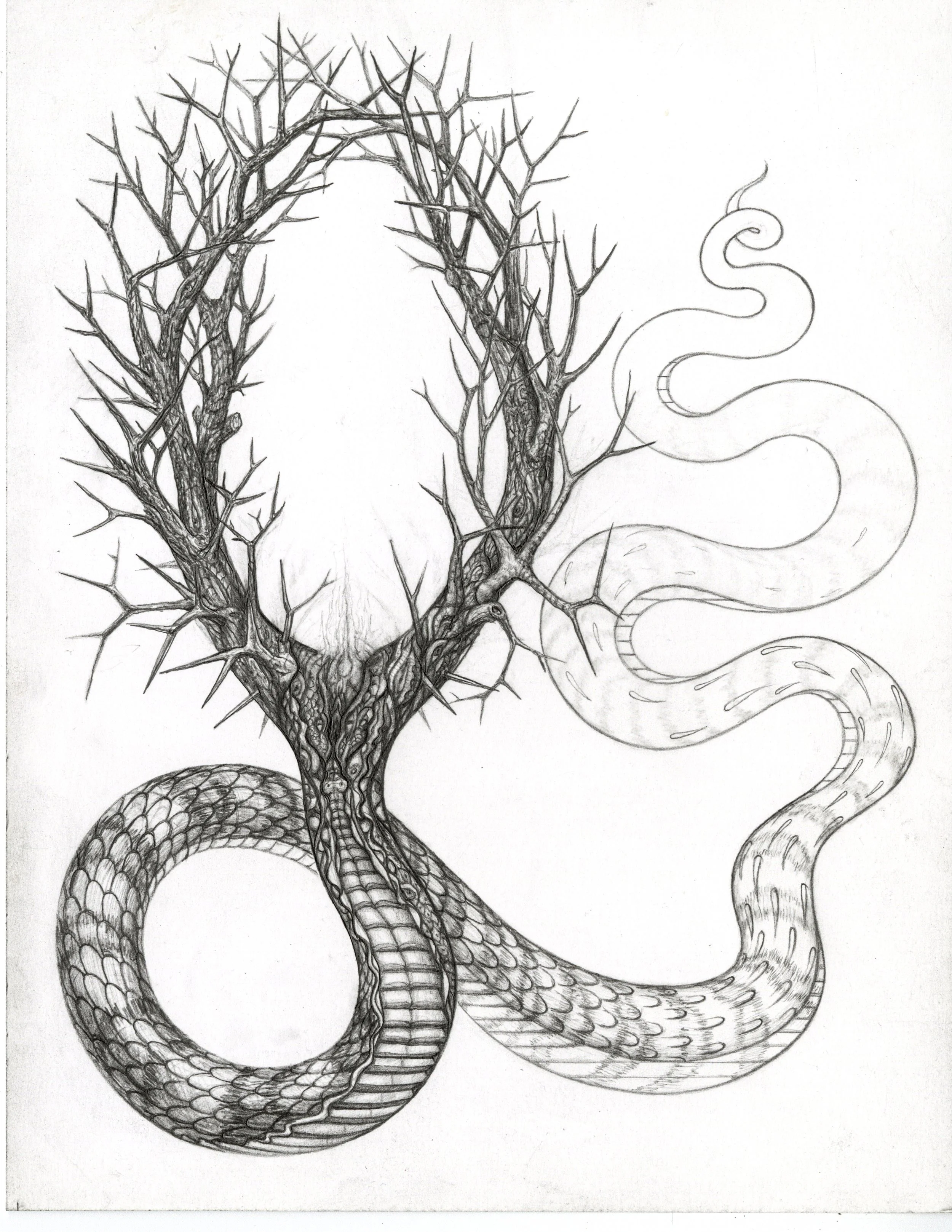
2025 Study #1 for The Postmodern Tree of Knowledge. Graphite on paper
I have been working on a series of images called The Postmodern Tree of Knowledge. The series began slowly and has evolved into a way to visualize a change I see in myself and in the culture around me: the shift from knowledge as something meant to nourish wisdom, toward knowledge as something increasingly used to secure power. I wanted a symbol that could hold both the inheritance of older sacred structures of meaning and the modern impulse to question, dismantle, and remake them.
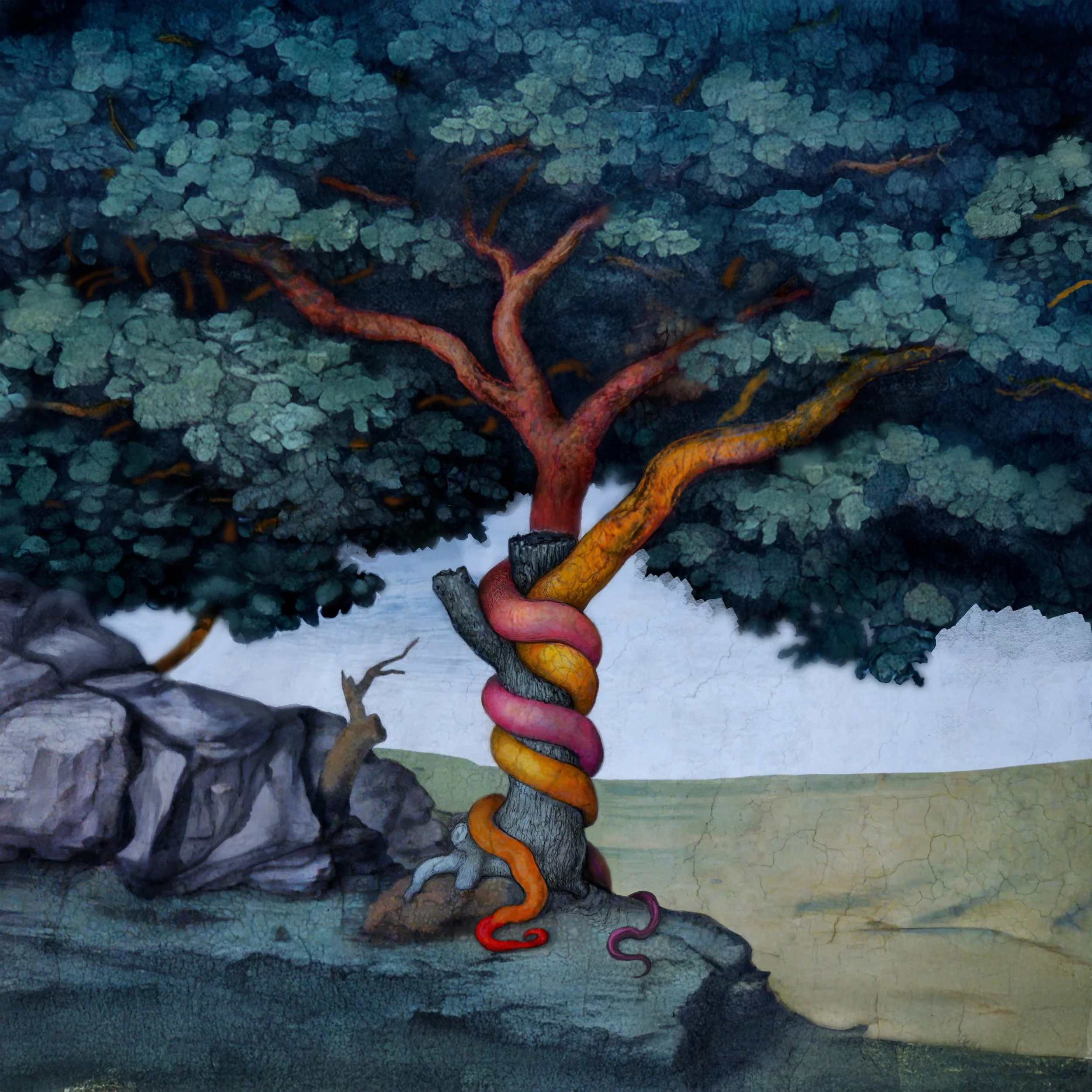
Digital Sketch For The Post Modern Tree of Knowledge. 2026 If this looks familiar, follow this link https://commons.wikimedia.org/wiki/File:Adam_and_Eve,_Sistine_Chapel.jpg
For most of human history, people pictured reality as a world tree—a living structure with direction and consequence. Its branches spread outward and upward toward the future, toward heaven, toward what we hope is higher than us. Its roots spread downward and outward into the past, into what is buried, feared, and foundational. In this image of reality, knowledge is not just information. It is supposed to grow into judgment, restraint, and responsibility. The Tree of Knowledge, in particular, becomes a picture of discernment: the human task of learning the difference between good and evil, true and false, and living as though those differences matter.
But modern critique—especially postmodern critique—complicates that tree. It asks necessary questions: Who benefits from the stories we call “truth”? What do inherited narratives conceal? What do they exclude? What happens when institutions use “knowledge” to protect themselves rather than to serve what is real? In that sense, critique can be accurate and corrective. It exposes hypocrisy, unmasks coercion, and refuses to let authority hide behind sacred language.
In my series, the tension begins when critique stops being a tool and becomes the ground itself—when the roots are treated as endlessly suspect and nothing remains stable enough to orient life. When foundations are perpetually destabilized, knowledge can become unmoored from wisdom. It becomes strategic. It becomes something we use rather than something we answer to. The question shifts from “What is true?” to “What works?” or “What wins?” The tree still stands, but it no longer feeds life in the same way.
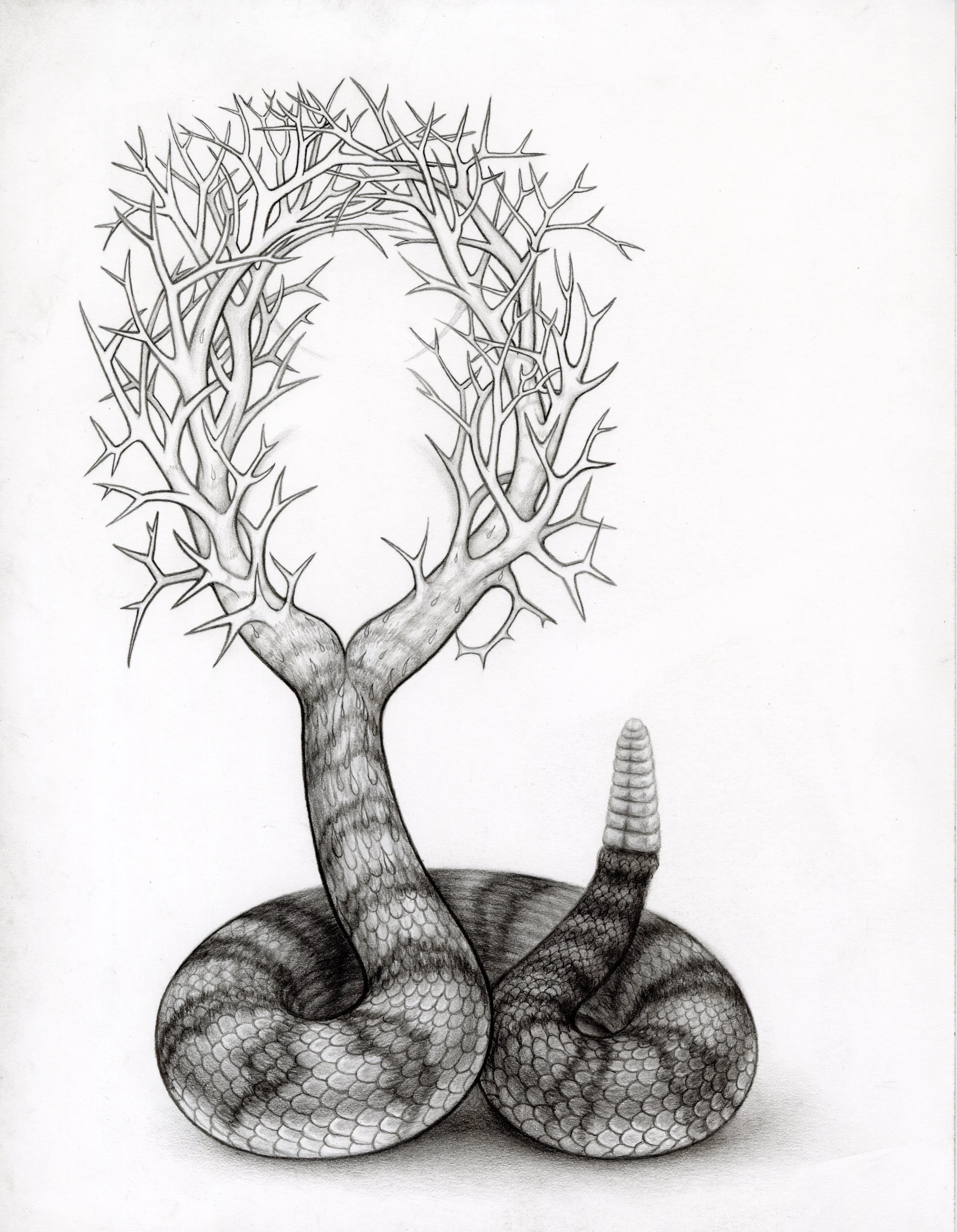
2025 Study #2 for The Postmodern Tree of Knowledge. Graphite on paper
That is where the snake enters the Postmodern Tree of Knowledge. The snake is not simply “evil” in my work. It is intelligence in motion: adaptive, alert, quick to respond, difficult to grasp. It can represent the necessary mind of critique; the mind that notices contradictions, exposes hidden motives, and refuses naive trust. But the snake also represents the danger of mind without higher orientation: intelligence that can justify anything, a reasoning that can twist truth when fear or desire takes over. The snake is what happens when movement replaces rootedness, when cleverness replaces wisdom, when suspicion replaces discernment.
The Snakehammer is the product of that transformation. It is a creature formed from the remains of the tree; knowledge hardened into a tool. The hammer’s wooden head implies that what once grew toward understanding has been cut down and repurposed. The serpent body implies a new kind of “root”: restless, evolving, unpredictable. The result is not a tree that bears fruit, but an instrument that strikes.
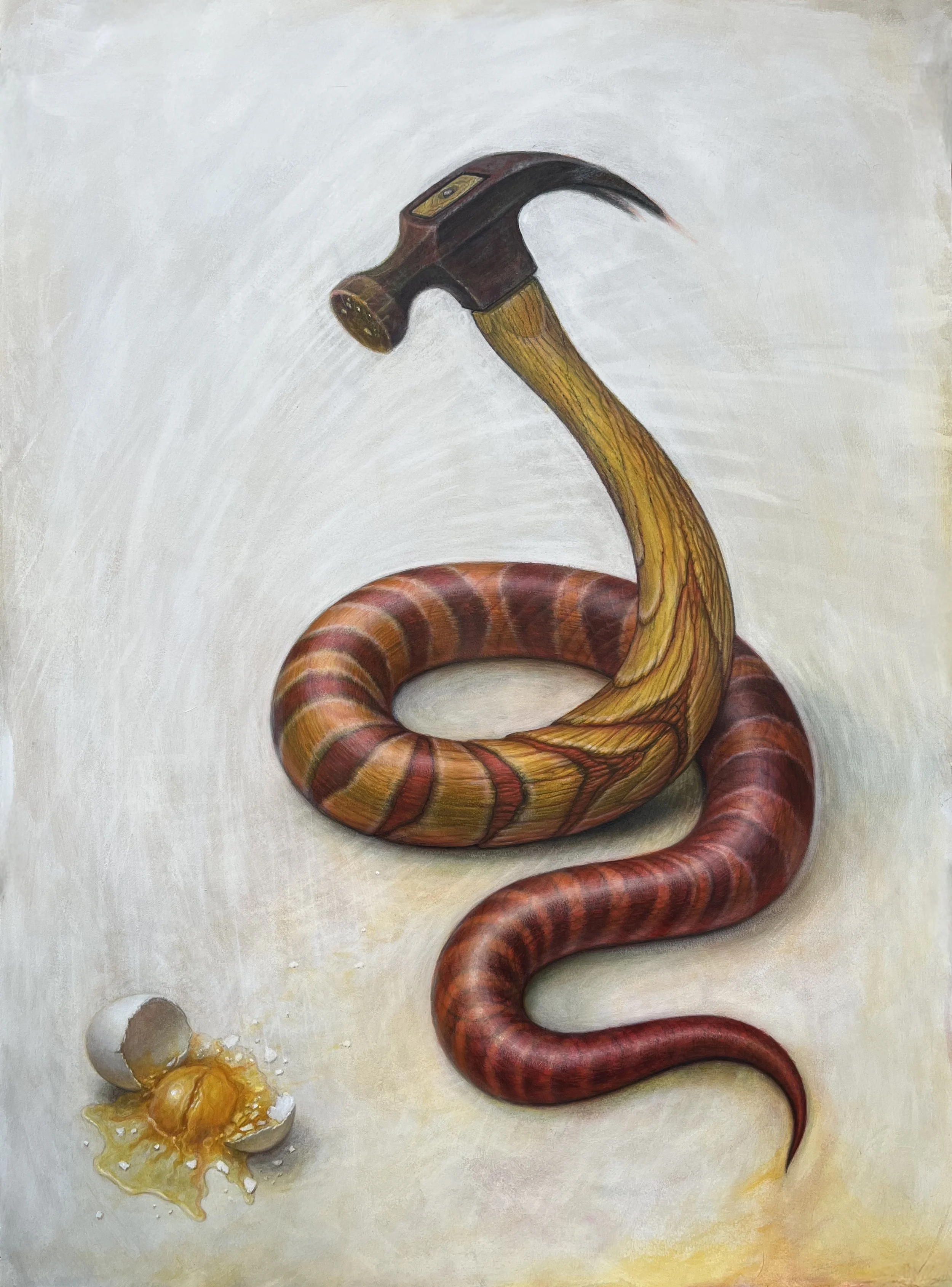

2025 The North American Political Animal, Acrylic and charcoal on paper
In The North American Political Animal, the Snakehammer sits poised above a broken egg. The egg is potential: ideas, families, communities, a future not yet formed. The image is not meant as a partisan accusation. It is a confession of unease; about what happens when strength is no longer guided by compassion, when conviction hardens into aggression, when the will to protect becomes the impulse to destroy. I recognize that drift in myself, and that recognition is frightening.
This painting is my attempt to give that problem a body; an image that can be seen and felt before it is argued about. It asks what kind of knowledge we are growing, what kind of power we are building, and what happens to the fragile future beneath us when the tool replaces the tree.